Back at school I was a fool the loner stoner who just wanted to be cool but then I opened my eyes and realized the true lies that occupies the young minds which reminds me there is no prize at the end of the line see those kids at school weren't actually cool they just over ruled with their pools jewels and ridicules and you're fed up but you gotta keep you're head up cause when we grow up they blow up. To non-existent in an instant this generations flooded with infants young minds who are stuck in the blinds who have the potential to change the world but their too busy chasin girls this says a lot about us no wonder why our parents fuss were not becoming anybody we're just a bunch of living silly putty and it's funny cause we act as if we got it figured out but we don't and we won't. see they say schools supposed to fuel us for tomorrow's life but tomorrow's strife wasn't part of the lesson plan so we began to see it was all a lie so why do we try? So we need to spread our wings and fly become our own kings and strive cause when the time arrives you'll realize to survive you gotta revive your mind, let go and grind...-Tavion Lashley
Showing posts with label writing. Show all posts
Showing posts with label writing. Show all posts
Saturday, July 18, 2015
Back At School...
I've been doing a lot of thinking this Summer on how school is setup to serve the majority of students and prepare them to be workers and doers, not thinkers and innovators. There are students that are not being given the attention they need and deserve because of large teacher to student ratios. Nearly all students go to school just to get through it: many of them are successful in that and many are not. Tavion confirmed some of my thoughts in the rap he posted to Facebook I included below.

Wednesday, May 20, 2015
Homeless in Des Moines
The flowing riverwalk, scenic skyline views, a cheering crowd after the crack of the bat, and the bustling avenues of bars. What could be wrong here? Life is perfect in Des Moines.
But there is a lurking secret. A hidden layer left unpeeled. The agenda thrown to the back of the pile only to be dealt with later. Every city has it: impoverished people.
“It’s their fault they got there. Maybe they should have worked harder”
It is not though. Many times it is not the direct fault of the person that lands them in a homeless shelter, street corner, or camping in tents by the river.
This fault lives in all of us.
 |
| Des Moines homeless resident's last day before their camp is destroyed by the city. Photo courtesy of WHOTV. |
It is our fault for not helping them get better: mentally, physically, emotionally, and socially.
It is our fault for being a country founded with discriminatory and unjust prejudices more than two centuries ago.
It is our fault for starting segregation and purposely impoverishing an entire race, and in turn, portions of our city.
It is our fault for holding prejudice still today against these people we have disregarded as members of our society.
It’s your fault.
The time is now, and we have the power to fix it today. There are many ways to help this issue, but one organization in Des Moines, specifically, has had such an enormous influence in the community that attaching numbers to their work is hard to do.
 Central Iowa Shelter and Services (CISS) was founded in 1992 by a group of local churches after five men froze to death one cold, wintery night when they were turned away from another jampacked shelter.
The decision of those churches sparked a revolution locally. CISS is now the state’s largest shelter serving approximately

250 residents an evening
69,322 overnight stays just in 2014
2,385 unique clients
115,355 meals
4,703 people with clothing
2,347 from their food pantry
They are making a difference in the lives of many.
 |
| St. Boniface youth feed & visit with clients at CISS. Photo courtesy of Mike Nass. |
The new building that opened recently allows CISS to assist more in the community, and most notably, enabled clients to be able to stay in the building during the day where they would not be exposed to the addictions or conditions of the street that disregarded them. It truly is rehab for the homeless.
Along with their 50 women’s and 100 men’s emergency beds and around 100 people in overflow nightly, the shelter also offers housing solutions for 19 Veterans and 38 clients who are able to pay for a portion of a low income apartment. This is accompanied by access to three meals a day, a computer lab for career readiness, basic hygiene facilities, case workers if wanted, a greenhouse dome and food pantry, clothing closet, and medical observations.
 |
| St. Boniface youth feed & visit with clients at CISS. Photo courtesy of Mike Nass. |
Central Iowa Shelter and Services is a helping hand to all, but they are just one. What if we all held out our hands? Lifted one another up during their struggle and tugged, pulled, and dragged them behind us for a little while; just until we left them in a better place than they started. The shelter can do a lot, but no matter what way you look at it, they are just one. There are people in Des Moines that are being missed and the numbers are only growing. We need to change our perception “that just because I don’t have today, don’t mean I’m not a benefit tomorrow” says resident Elliott.
Wednesday, September 11, 2013
School Shouldn't Suck - Support #SBAR
You learned to read. To write. To speak. To stick up for yourself. But, when you entered high school you had to start waking up at 6:30 five days a week. Going to school after relentless studying, cramming, and assignments from the night before. Having to take standardized tests to prove that you are competent of basic skills.
Standards Based Grading is a compilation of “I can…” statements that give students a guide to the expectations of their teachers and their courses. Standards Based Grading should be incorporated throughout all of our education system because students know what they have learned, successful motivation does not come from a grade, and students are prepared for a life full of learning outside of their primary educational institute.
Students know where they stand on what they have learned and what’s ahead of them to learn. Each standard is a different skill that should be understood and, at a point in time, be able to be demonstrated. Students knowing the skills they are being taught by doing work in critical thinking problems, reading, and writing to get rid of the “I don’t do anything in that class” phrase students often use. Oh, and the infamous dinner question when your parents ask “What’d you learn today” and you reply “Nothing…” Standards Based Grading allows you to know exactly what you know, accurately, not just based off of one test score.
Along with enabling students to see their own learning, Standards Based Grading allows for more learning to occur. A teacher giving a student a zero on an assignment is not going to motivate that student to try harder. It’s going to show them that a number matters more than their learning does. It won’t make them try to re-do and relearn the content, it will make them give up. If the teacher doesn’t believe in the student, why should the student believe in themselves? It is not the numbers that matter but the people and ideas that associate them. Therefore, grades being used as an ineffective motivator would be eliminated in a Standards Based environment.
Chiefly, Standards Based Grading is the most opportune system in preparing students for life. A student will very rarely ever be given a grade with an A, B, C, D, F in the working world. They will be given a task, points, or standards, to cover in a project, presentation, or paper. Upon completion, they won’t be given a score. They will get all kinds of feedback: constructive, negative, positive all based upon whether it met the original outlined standards. The performance of that employee is not only clear to the teacher, but the employee and other supervisors.
Because Standards Based Grading enables students to know their position in what they have learned, motivation does not exist in letter grades, and it prepares students for a life enriched with constant learning it should be implemented throughout our entire education system. It is based on people, not in numbers. Don’t become a letter or a number. We are not a world of synonymous robots performing laborious tasks in uniform. Standards Based Grading is the future of our nation and workforce. The numbers don’t matter; it’s you that matters.
Where did the learning end up at in this evolving school scene? Where did you end up?
Standards Based Grading is a compilation of “I can…” statements that give students a guide to the expectations of their teachers and their courses. Standards Based Grading should be incorporated throughout all of our education system because students know what they have learned, successful motivation does not come from a grade, and students are prepared for a life full of learning outside of their primary educational institute.
Students know where they stand on what they have learned and what’s ahead of them to learn. Each standard is a different skill that should be understood and, at a point in time, be able to be demonstrated. Students knowing the skills they are being taught by doing work in critical thinking problems, reading, and writing to get rid of the “I don’t do anything in that class” phrase students often use. Oh, and the infamous dinner question when your parents ask “What’d you learn today” and you reply “Nothing…” Standards Based Grading allows you to know exactly what you know, accurately, not just based off of one test score.
Along with enabling students to see their own learning, Standards Based Grading allows for more learning to occur. A teacher giving a student a zero on an assignment is not going to motivate that student to try harder. It’s going to show them that a number matters more than their learning does. It won’t make them try to re-do and relearn the content, it will make them give up. If the teacher doesn’t believe in the student, why should the student believe in themselves? It is not the numbers that matter but the people and ideas that associate them. Therefore, grades being used as an ineffective motivator would be eliminated in a Standards Based environment.
Chiefly, Standards Based Grading is the most opportune system in preparing students for life. A student will very rarely ever be given a grade with an A, B, C, D, F in the working world. They will be given a task, points, or standards, to cover in a project, presentation, or paper. Upon completion, they won’t be given a score. They will get all kinds of feedback: constructive, negative, positive all based upon whether it met the original outlined standards. The performance of that employee is not only clear to the teacher, but the employee and other supervisors.
Because Standards Based Grading enables students to know their position in what they have learned, motivation does not exist in letter grades, and it prepares students for a life enriched with constant learning it should be implemented throughout our entire education system. It is based on people, not in numbers. Don’t become a letter or a number. We are not a world of synonymous robots performing laborious tasks in uniform. Standards Based Grading is the future of our nation and workforce. The numbers don’t matter; it’s you that matters.
Thursday, April 4, 2013
Technology: Help or Hindrance to Communication
This is an essay I wrote two months ago in my speech class, now publicly publishing* it.
Communication is extremely different than even a decade ago (Frenkel). The integration of email and social networking sites has benefited and prohibited effective communication by providing instantaneous feedback, disallowing one to study their kinesics, and taking time to reflect and ponder what they just received. Habitual reevaluation is necessary to see the benefits and downfalls of each channel of communication we use (Frenkel).
Some wonder why this is a dilemma now. Before the deep integration of email the use of letter writing was much larger. Humans are used to the joyous feeling of getting mail. Standing by the mailbox on a summer afternoon opening cards from your friends and family. When you run inside and are enthused to respond right away to their letter, you get in the right mood and reflect a little before you start writing (Rosen). Unlike this rare event of the past “we are living in an age of electronic intimacy” and for most people “this is new emotional terrain” (Rosen). Very seldom do people take time to write letters. Their replacement has been the introduction of email. The encoding process of typing an email differs greatly from that of the emotional rush before writing a letter. “I do notice that emails are often fired off without any real consideration” and have been subject to great variance in the receiver's decoding because of their purpose (Rees-Mogg).
Contrary to the popular belief of most, emails and communication using new channels of technology do have benefits. The acquaintances formed using pen and paper can now be accessed by your fingertips in real time online (Rosen). Using email allows for time to think and reflect before responding (Cellan-Jones). One also gets a dopamine, stimulant that makes one happy, high when you get new emails, texts and interactions. (Rosen). Much of the communication we now do is non-verbal and carries into every part of our lives. A day of work consists of using many channels, which can be but are not limited to calling, texting, emailing, instant messaging, blogging, tweeting, and participating in webinars (Frenkel). The ease of sharing and resharing emails is a much simpler way of communicating without needing to re-encode a message each time. An AT&T commercial portrays effective communication as businessmen sit in a coffee shop emailing into a meeting (Rosen). An account from an English writer, Roy Cellan-Jones, sums up that “I can’t imagine how I would do my job without tools like Twitter” (Cellan-Jones). Various technologies available to us benefit, not hinder our communication. We have become smarter because of technology. It has improved some’s self perception by allowing them to be social without face-to-face impromptu conversations. Some types of people need time to think before relaying their feedback and technology grants that to them. “Technology is a massive aid to communication” by gaining the opportunity of instantaneous feedback and the constant development of new forms that grant us the use of paralanguage and kinesics. The ever changing “communication technologies provide an addition, not a replacement, for traditional means” of communicating (Cellan-Jones).
New communication also has many downsides (Frenkel). The use of email has a defined purpose of efficiency, not human feelings (Rosen). It was not intended for the purpose of entertaining but to exert control and inform. Email as it was designed, could have devastating impacts on our businesses and society. The enhancements to technology is driving us to be lazier about talking with one another. Administrators writing emails that are encoded with frustration could be decoded as anger and rejection which could lead to contracts or business being missed out on. That business decision will be regretted in the future because of a moment not taken to check for an encoding error (Cellan-Jones). Your words permanently stay in writing and attached to your name so the take the time to make sure they are beneficial for you (Frenkel).
 |
| Old, one-way communication. |
If not used with a formal purpose, email could become an addictive habit (Cellan-Jones). It has evolved into the lazy way of communicating (Price). Executives have viewed it as the ruder form of communicating with someone because very little effort is involved. Getting hooked online is dangerous to the art of talking face to face but the large amounts of tweets, facebook messages, and phone calls every day are overwhelming. Overwhelming, but appreciated because you are able to use photos and voice to encode and decode a message allowing for more effective feedback that email does not provide (Cellan-Jones). One advancement in our society that has caused this revolution of ditching email is our smart phones giving us the happiness of being connected and receiving feedback much faster than an email provides it (Rosen).
Email has come under fire because of it’s ancient years in technology time. The foundation it laid for online communication has transformed us into data hungry creatures. It has turned private friendships into a mass spectator sport where everyone watches and participates while companies like Facebook collect from our profits. Our society demands us to publicize our feelings and relationships frequently. It has caused our self perception to change dramatically by creating more self conscious human beings. Many people suffer from society anxiety when they do not receive any new messages. The more friends one tends to have on Facebook increased their chance of saying others lived happier lives than them (Rosen). Ones online presence and digital footprint “often lays the foundation for your reputation long before you can shape it yourself” (Frenkel). A majority of people perceive “themselves rather than their appliances as being ‘plugged in’” (Rosen).
Using technology as a channel extremely limits your ability to send and receive information effectively. Sarcasm cannot be interpreted through “words on a screen” and leads to ineffective communication and possibly a communication breakdown. There are many numerous ways you can understand one simple sentence. As human communicators, one should be able to recognize where the error occurred and know how to go about fixing it with feedback and clarification. It is normal for one to make assumptions when encoding because “the fact that you know how you intend for your message to be received biases you even more to believe that’s the way your message will be read” (Frenkel). Many times when reading someones post or email it can be misinterpreted because of a lack of background and purpose. The feedback that follows is the most important piece in being an effective communicator (Frenkel).
Crucial steps in avoiding ineffective communication are not difficult at all. The first item to check for is your purpose. Use the channel appropriate to the event and purpose of your communication. Are you entertaining, exerting control, informing, sharing feelings, entertaining or simply being a conformist of following social rules because everyone else uses that channel of communication? If you have received an email in all caps with an encoding of excitement, you probably decoded it as being yelled at. If the sender would have sent you a text, the informality would have suggested something more fun (Frenkel). Email is best for relaying information to one person, not many who have no meaning behind why they were included in your email chain. Some companies, such as Atos, have banned email as a form of communicating within the company. Volkswagen has also prohibited its Blackberry servers from sending email to an employee 30 minutes after their shift is over. These companies are “not rejecting modern communication but recognizing that a new generation already thinks email is old hat” (Cellan-Jones). The second piece to check for is if you are assuming and taking the shortcut. This can greatly hinder effective communication as well. It is okay to assume as long as you are aware of when you are doing it and ready to defend yourself from the receiver. Train yourself to make the assumption that many people will be reading your words. Consider the many possibilities that next message has in their decoding process (Frenkel). If “you can do the count to ten rule and think a bit before you respond” all should be fine (Bulger). Adding into the equation everything happening around you, do not let the distractions affect the cognitive load in your mind (Cellan-Jones).
Talking is important (Cellan-Jones). As more people realize this there will tend to be more migratory friendships, connections that started online that form into face-to-face, real world relationships. By having access and constant feedback will humans become unable to demonstrate the feeling of longing for one another? (Rosen). “We used to simply drop in on people or bump into them in the street”. We were “able to visualize the ‘whites of their eyes’ when making direct contact (Cellan-Jones). The use of kinesics has been forgotten in many forms of communication besides personal confrontation. This is a very important part of communication because we miss 75% of what we hear each day. If we are able to watch and connect ones actions over their words we receive a verbal and nonverbal message to decode correctly. This is a big improvement in having effective communication without interference. As a group of college students summarized best, “you use social networking and modern technology to arrange meeting face to face” (Cellan-Jones).
It has come time to “Rethink Possible” and reexamine our world and how we communicate between cultures, species and even ideas (AT&T). Before, “ a closed door usually stayed closed forever. No longer” is this the case (Rosen). Integrating email and social networking into our lives has benefited and prohibited effective communication over forms of talking and letter writing by providing constant feedback, blocking one from studying their kinesics and taking time to reflect and think before sending our feedback. We live in a constantly changing world but humans adapt. We have previously and we can again. The question though is will it be for the better? (Rosen).
Works Cited
Cellan-Jones, Rory. "We Don't Talk Any More - Is Technology Harming Communication?" BBC News Technology. BBC, 29 Dec. 2011. Web. 12 Feb. 2013. <http://www.bbc.co.uk/news/technology-16313832>.
Frenkel, Stephen. "Communication 2.0: The Perils of Communicating Through Technology." Harvard Negotiation Law Review. Harvard Negotiation Law Review, 5 Apr. 2009. Web. 12 Feb. 2013. <http://www.hnlr.org/2009/04/communication-20-the-perils-of-communicating-through-technology/>.
Rosen, Christine. "Electronic Intimacy." Wilson Quarterly 36.2 (2012): 48-51. Literary Reference Center. Web. 11 Feb. 2013. *While creating reduntant alliterated introduction phrases.
Monday, July 23, 2012
A Difference, A Change, A Legacy
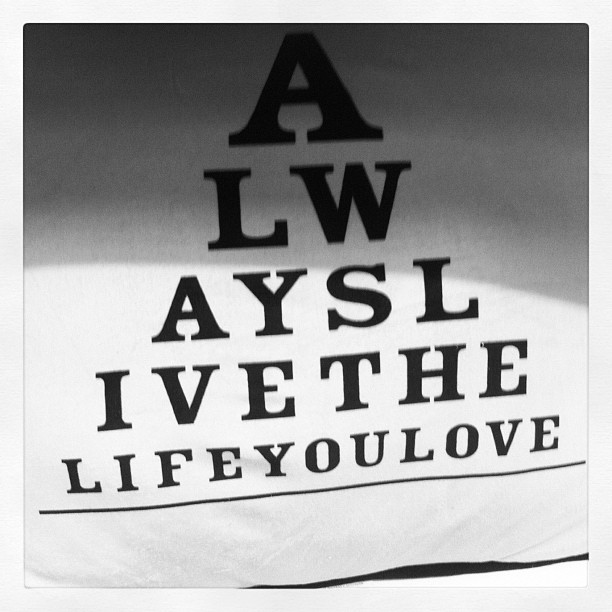
I find myself just going through the motions of daily life, doing what I'm instructed to do. Not thinking, not reflecting, not becoming enthusiastic by anything that I'm doing. About the change, difference, and legacy I'm leaving. Becoming frustrated with having discussions that are only able to last 15 minutes during advisory when we could spend all day and still not be done. Overwhelming myself with trying to be a perfect person and enjoying the rare people that realize I'm not. I was digging myself a hole until I realized something yesterday.
Nothing is considered important to me until I make it important.

People may say that personal standards, mission statements, and beliefs is what makes you yourself. But only if we make it matter to us. I was chugging along at incredible speed, doing more than I ever thought I would in one year. I would attempt to make it matter by stopping, relaxing, then thinking, "What matters to me? What do I want to do next?" only to continue on to doing what I needed to do next. Even into this summer I was still doing more than I'd expected. I was still chugging along, in the middle of July. What type of kid does that? Yesterday I decided that it was time to stop and be selfish. I was going to use the rest of my summer for me. Reminded by Kristina Peters that it was great to put pen to paper and write. I told myself I was going to write anything I wanted so long as it wasn't social studies notes, english essays, math homework, or science labs. I hadn't written anything since then. I was going to stop going and start writing.
Last night I wrote down this reflection of what I consider my first world problems and that night I slept the best I could ever remember. Not laying awake for hours thinking about what I needed to do, wanted to do, or what I'd done. My plan is to get my sanity back by transforming the #365views project into a daily writing project. Writing something of my own everyday. Whether it's on sticky notes, lined paper, or published on this blog I consider it to all be writing. I'm going to put pen to paper, become enthused, and reflect upon my difference, my change, and my legacy.
Friday, April 27, 2012
1908 Prairie Hill (Poetry)
I wrote this during writers workshop last Thursday and thought that it needed to be published somewhere. It is not intended to describe the Waukee Community School District in any way, shape, or form but stands as an eye opener to anyone willing to read.
As I sit here
in this class
I wonder how everyone can pass.
The world is changing,
and we're sitting still
in this static class,
from the Prairie Hill.
Nothing is new
it will all break down soon
for the new is too new,
for this One Room Retention House.
The lectures are long
the learning is little.
No one gets nowhere,
in this Brick Bomb Shelter
stuck in the middle.
Just because
we were taught
the same stuff from years ago, like
science
math
and how to bake cookie dough,
you won't give us a job
anywhere but the old Prairie Hill?
I walk through the halls
and can't help but wonder,
if its a new century.
I can't really notice
inside of this
perpetually
stalled
and darkening
place that they call school.
-Ian Coon
As I sit here
in this class
I wonder how everyone can pass.
The world is changing,
and we're sitting still
in this static class,
from the Prairie Hill.
Nothing is new
it will all break down soon
for the new is too new,
for this One Room Retention House.
The lectures are long
the learning is little.
No one gets nowhere,
in this Brick Bomb Shelter
stuck in the middle.
Just because
we were taught
the same stuff from years ago, like
science
math
and how to bake cookie dough,
you won't give us a job
anywhere but the old Prairie Hill?
I walk through the halls
and can't help but wonder,
if its a new century.
I can't really notice
inside of this
perpetually
stalled
and darkening
place that they call school.
-Ian Coon
Monday, March 12, 2012
The Perpetually Shining Stairwell - A Memoir
.jpg)
The stairs were purple. They had plastic covers with rigid lines along the edge to prevent slipping and sliding falls. The carpet had blue and purple dots in it that turned a dark maroon red when science experiments were clumsily spilled by overexcited. The stairwell was musty and full of moisture until the cooks filled it with the fumes of processed chicken and stale hamburgers. The stucco walls glistened with paint, but had the texture of adobe. The 1930’s graduates on the walls always sent shivers down my spine. Drawing me into a trance, daring me to look at them until you heard the grumpy old lady ask, “Where are you supposed to be right now young man?” and continued walking. The stairwell was always either empty or full, but never anything in between.
* * * *
Open House Night should be old news by now-- we do it every year. Believe it or not, it was enjoyable to go to school for about the first month. Students got to talk about everything you did that summer, meet your friends from last year again, and show off your new shoes and sparkling school supplies. While everyone else was doing that, I was in the stairwell looking at pictures. Anyone may have thought, “That’s Ian, observant little guy,” acting like they knew what they were talking about. Teachers were constantly trying to find where to put me. I’d get moved from group to group or get special projects to work on when, all I really wanted was to fit in with everyone else. That’s when I heard the thump, creek, thump, creek up the stairs. It sounded like a ghost creeping its way back upstairs to the closet where the rumor mill said it lived. Once a week it would come out from its dormant sleep and scare some lonesome soul in the bathroom, hallway, or stairs. It especially liked to possess lights in the stairwell. From the platform below you could hear a deep, gurgling voice bellow, “I hobbled all the way through the building, looking for one...” The hanging light above me flickered and I scuttered over to stand under the other light. The voice continued, “...only to figure out that I needed to go up to the 3rd floor...” My heart skipped a beat and I about peed my pants; this was the ghost.
I looked at the pictures on the wall trying to act like I didn’t hear whatever this thing was. It must have been obvious that I had heard it talking, because this overweight man apologized to me as he waddled past. The puny kid next to him was shaking, scared to death while he fiddled with his crutches. They continued their journey to the third floor.
* * * *
It was one of the only things I’d ever lost. Normally, I never lost anything. I needed to admit that I did though, as this was an extremely important piece of paper.
I feebly walked up to her desk and managed to stutter. “I...I... lost my paper. Do you...um.... have another?”
“What paper was it?” she questioned intently.
“The...umm...science...rubric,” I stammered.
“Stay after school for a sec and I’ll run and grab it off the printer,” she cheerfully announced.
Now everyone knows that I lost something, there goes that record, I thought as I walked back to my desk. The day went by and the bell sang its song to let everyone else out of the building. I put away my pencil, eraser, folder, and book and sauntered my way to the hall, but made the mistake of peering down the stairs before getting my backpack. There was a howling from the floors below that echoed its way up the stairs. “Why don’t we get a brand new building?” I murmured to myself. Then a creak, bang, and a howl, the exact noises that ghosts make. I forgot about my grouching and ran to snatch my backpack off of its hook, not even caring to close the locker door behind me. In the room I started to organize the crayon bin, putting them all point forward in neat, little 12x6 rows in the tub. I was still panting, watching the doorway and wondering if the stairwell had swallowed her. It’s known to do that from time to time. I was really getting worried as I finished sharpening the colored pencils when she came back in, saw me, and burst out laughing. “Here’s your printing, bud!” She choked on the words while still having a laugh attack. For the rest of the year, and to this day, I stay after school to help everyone. What a great thing that pain stricken, old printer caused.
* * * *
Being the lonesome kid that was shy and afraid of the world was not an admirable thing to be for a social life. All the boys were busy acting like two-year-olds, yelling and screaming over one missed shot during basketball at recess. All the girls were checking their hair, constantly putting on lipstick and gossipping about the way everyone tied their shoes. I was in my own little world, not consumed by sports and rambunctiousness nor appearance and judging people. My priority list was to be sophisticated, not stand out too much, and get out of elementary. It was arduous fitting in with a group, so I went with the girls because they had some time in between beauty checks where they played tag or just talked. Sara, Chandler, and Brandy were the three most accepting of them. We’d all swing in a row, playing marriage until one of us slowed down and divorced our swing partner. Sara and Chandler stayed after school and checked papers with Mrs. Netten while I reorganized the room. They skipped Live Y’ers to help after school, and I don’t think they missed it too much. The daycare group ate a snack, took attendance, and then let you play games in the cafeteria until your parents came. I always wanted to be a Live Y’ers kid. I don’t want to point fingers, but Brandy was the one that usually caused all the drama. She was the one that started the childish “I’m not your friend anymore” battles with Chandler, because Chandler played with Sara and me at recess instead of her.
Walking up the stairwell from recess one day Brandy was taking off her gloves and holding onto the handrail at the same time when she managed to “hurt herself” and needed a band-aid. Mrs. Netten understood that in third grade culture, band-aids were a sign of honor and awe. Mrs. Netten never refused a kid a Band-aid, even if they were just trying to spruce up the most boring of days.
* * * *
The worn out scraping of shoes down the stairwell. Exuberant screams from children playing “Ghostbusters” in the gym. The repetitive marching back up the seven stairs to be re-connected with the rest of the school building. Gray brick walls. Red carpet spotted with darker shades from water infested ceiling tiles taking over the building. I couldn't stand it anymore.
He drove me crazy. It was February and he had figured out all the things that made me tick: unstraight stacking, mismatched colors, incorrect answers, and making me look stupid. I swear if he does it one more time I will freak. People say that all too often and it never happens, but at that moment he did it one more time. He did it. He stepped on me one more time. This fell under the category of making me look stupid. I couldn’t believe that he really did it. I was supposed to be the respectful line-leader, but I freaked. I yelled at him with all the rage filling my little 3rd grade body. “I’m tired of this! Stop it now!” That six seconds, those six words, seemed like an eternity. He just stared at me, looking straight into my eyes. Everyone was staring straight through him watching me, enticed by this kid who never said a word but had just flipped out. Great, I thought. Just great. I really just did that, and now everyone thinks that I’m stupid, mentally unstable, and have anger issues. These things happened all the time -- we were the lower class elementary. But this incident was an exception. It was me who did it. Everyone walked so silently and solemnly back up the stairwell. I was trying my best to act normal when I noticed that he had snuck to the back of the line. He gave up his assistant line-leader spot, I thought. Something is definitely wrong. That’s when it hit me square in the head, as if the ghost had flown out of the pictures and bumped into me floating down the stairs. Our guidance counselor had always recited to us, “Bullying hurts people. Your actions aren’t only impacting you. Hurting people on the inside is much worse than on the outside.” Guidance counselors couldn’t teach me, I had to. This incident snapped me out of my little world. Ianville was burning down rapidly inside my head. Other people really do have feelings and those feelings matter just as much as mine. Other people are bullied and teased. It’s not just me. I did something so significant to him that he gave up his line-leader spot and nobody asked what was wrong, not even Brandy.
* * * *
The assembly gave everyone a joyful ending to the school year. It was hotter inside than it was outside with 800 kids packed into a so-called gym that has no air conditioning. I never really understood how a kid hadn’t died of a heat-stroke in there. The floor echoed in the small gray gym as the rest of the kids filed in. Mrs. Cronk, our music teacher, led us in singing while Mr. Nemitz, the principal, strode to the center of the gym, surrounded by kindergarten kids trying to give him high-fives. “It has been a great year here at Waukee Elementary and we have lots to be thankful for; the students, the staff, the learning that’s still happening. Most importantly at this point in time is our wonderful, movie-making, computer teacher, Mrs. Doud!” Mr. Nemitz boomed over the raspy speakers dangling on the wall. Mrs. Doud started the slide show and music and the crowd went nuts when they turned off all the lights. There were pictures of kids posing, playing, and presenting from all year long. I sighed, relieved that no one had managed to snap a picture of me. I thought of the three friends I made, the mistakes I learned from and the lessons that changed my life. People laughed and giggled as they looked around at their friends when they saw a picture of them. Instead of staring into the past, I peered into the future. Going back to that stairwell after third grade, the sun shone brightly through two windows into a previously perpetually darkened stairwell.
Subscribe to:
Posts (Atom)